
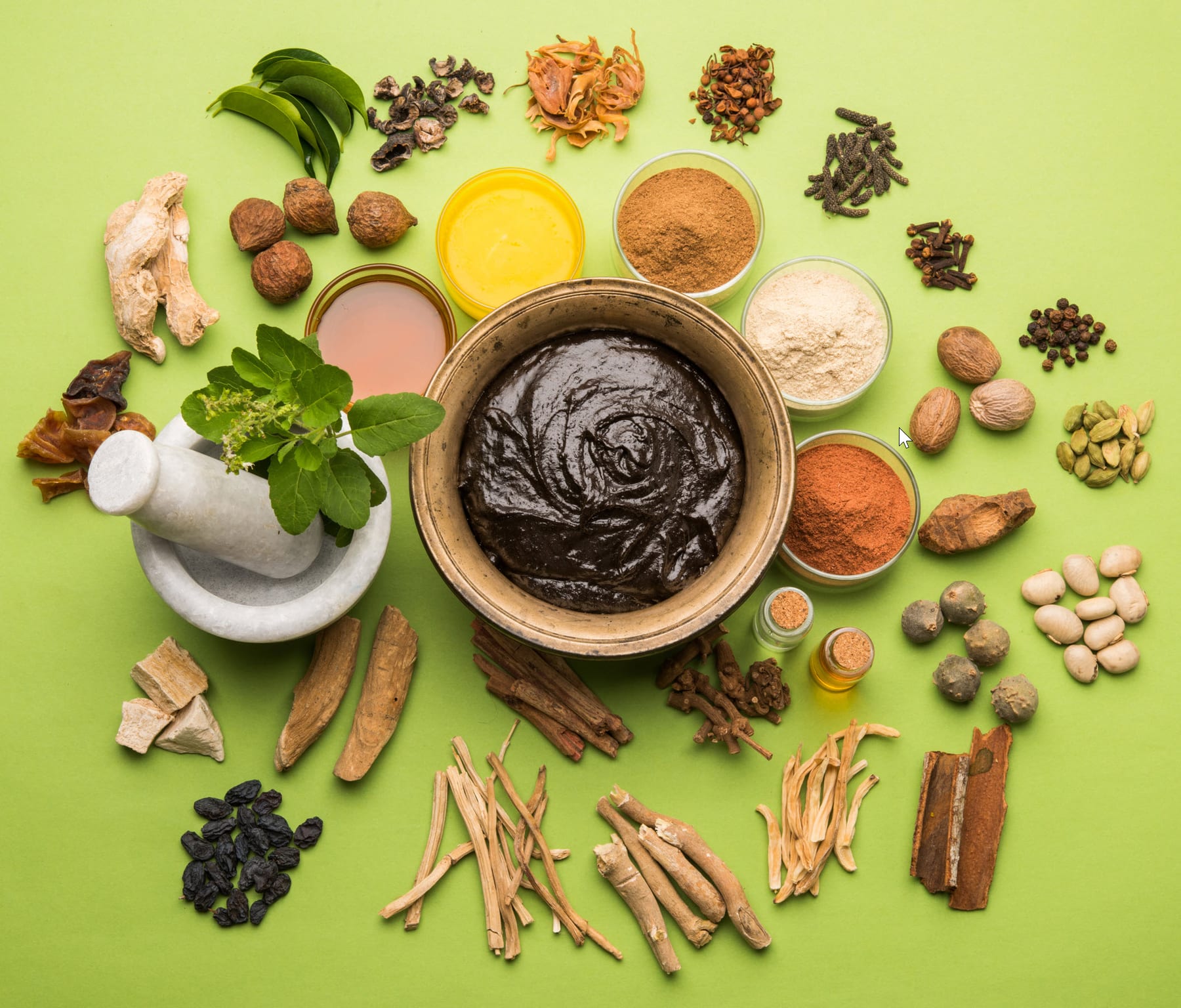
November is sweet, sour, salty season in Ayurveda. The cold weather has driven your heat deep, which means your digestive fire is strong and ready for heavier holiday foods. The season's main work is combating the dryness that cold brings, oiling the body with daily abhyanga, and getting to bed earlier. Susan Bass on the November playbook.
Why November means sweet, sour, salty foods
This is the season for the sweet, sour, salty foods that everyone loves. The cold weather pulls the heat deep into the body to protect you, which makes the digestive fire strong. You have the power to digest sweet, sour, salty heavier foods. The healthy holiday foods are meant to nourish and build you. They come at a time when your digestive fires increase, so you have the power to digest them.
Why cold equals dryness (and what to do about it)
Cold equals dryness because cold creates vasoconstriction (narrowing of blood vessels), which creates loss of fluids, which creates dryness. If the kidneys don't release the excess fluids, vasoconstriction can also create high blood pressure.
We combat dryness with soup, stew, casserole, porridge. Everything you eat has a mineral-rich water base. No dry foods.
Soluble fiber is the November fiber. It expands and becomes slimy in water, supporting digestion by lubricating the gut wall. It also eases constipation and builds immunity. Foods rich in soluble fiber: chia seeds, flax seeds, steel-cut oats, psyllium, yams, turnips, figs.
(Turnips are an underrated winter food. Wash and cube a turnip. Top with ghee and pink salt. Sauté or bake until soft.)
Chai spice season
November is chai spice season. Put the chai spices in your butternut squash soup. Explore all the warming spices in the Ayurvedic medicine cabinet:
- Cardamom
- Cloves
- Anise
- Caraway
- Cumin
- Cinnamon
- Saffron
- Ginger
- Turmeric
Oil the body: abhyanga and pada abhyanga
Ayurveda says: abhyanga (self-massage) is very important, and pada abhyanga (foot massage) is essential. Every night before bed, massage castor oil with frankincense and lavender into your feet. Then put on warm socks. This grounds Vata and improves sleep.
Oil is to the body what love is to the soul. The Sanskrit word sneha means both love and oil. November is the season to use good oils. Kapha and Vata do well with sesame oil. Pitta does well with coconut, sunflower, or apricot kernel oil.
Why sleep matters more in November
This is hibernation season. You need more rest. Your body is working hard to combat cold, strengthen immunity, and build insulation for winter. It takes a lot of internal resources. That's why people are hungrier and want heavier foods in November. Your body wants and needs heavier food. You feed your joints and mucous membranes with these heavier foods. If you don't, by January you could feel achy joints or low immunity.
November by dosha
Vata. Batten down the hatches season for Vata. Get into bed early. Focus on external oleation and nourishing foods. Vatas won't have the same resources they have in spring and summer.
Kapha. Kaphas have abundant natural resources and can move through November with relative ease. The caution is overindulgence in heavy foods. Nourish without excess. Kaphas' challenging seasons are February through May, so how well they take care of themselves now will determine how they fare in spring.
Pitta. Ravenously hungry, but able to digest a lot. Pittas have a fun feast during the holiday season, especially if they did their autumn cleanse and released trapped heat. The goal is to not overcommit. Pitta signs themselves up for everything. Be thoughtful about your calendar. Have downtime. Be in bed by 10 PM to nourish the liver (Pitta = liver). Pittas fare the best in this season; just don't overcommit.
Rasayanas to fortify for winter
Chyawanprash is an important lung tonic and nourishing rasayana (rejuvenating). Its base is amalaki, the Indian gooseberry, which has more vitamin C than any fruit in the world. Important that we get natural vitamin C in our diet. You can eat chyawanprash with a spoon, cook it into warm milk or water, or spread it on toast. It improves complexion, eases constipation, strengthens the immune system, calms the nervous system, improves memory and concentration, and slows the effects of aging.
Shilajit is a mineral pitch rasayana. It is warming, so November is a good season for it. Hot, spicy, pungent, opens the channels. Rejuvenating and anti-aging. Its direct translation in Sanskrit is "destroyer of weakness." Taken in the morning in small amounts with warm water on an empty stomach. (Be careful for fakes; research your source and make sure it is tested. Talk to your doctor before changing anything about your diet, supplementation, exercise, or lifestyle routine.)
The Charaka Samhita says: "There is no curable disease in the universe by which shilajitu cannot be helpful, when administered at the appropriate time, in combination with suitable formulas, and by adopting the prescribed method. When administered to a healthy person with similar conditions, it produces immense energy."
Garlic season (one of the three Amrit herbs)
November is garlic season. Garlic is one of the three Amrit herbs in Ayurveda. Amrit means unusually nourishing and special, the ultimate nectar. Garlic is good for Vata balancing. It is a digestive that helps remove ama (toxicity). It is anti-aging, rejuvenating, supports skin health, is an aphrodisiac, and acts on all seven bodily tissues (dhatus). It increases Pitta because it is rich in sulfur. My favorite use is garlic ghee.
(The three plants with amrit, nectar of the gods, in them, according to Ayurveda, are guduchi, haritaki, and garlic.)
Oven-roasted garlic. In a 400°F oven, roast whole garlic for 40 to 70 minutes until caramelized, soft, and spreadable. Spread like butter on crostini, vegetables, or puree into soups.
Chai spiced tea recipe
Ingredients:
- 4-8 cardamom pods
- 5-7 whole cloves
- 2-3 star anise
- 2-4 peppercorns
- 1 cup water
- 2-3 slices peeled raw ginger (muddled or grated)
- 0.5 Ceylon cinnamon stick
- 2 tablespoons loose leaf tea (or 1-2 tea bags). Could be black tea, decaf tea, or rooibos
- 1 cup milk of your choice (almond, oat, cashew, hemp, macadamia, or organic non-homogenized whole milk)
- 1-2 teaspoons coconut sugar, maple syrup, or turbinado sugar (to taste)
Instructions: Lightly crush cardamom, cloves, star anise, and peppercorns. Place in a small pot with 1 cup of water. Add ginger, cinnamon, and tea. Bring to a boil. Turn off heat and let steep 10 minutes, or for several hours (the longer, the more flavor). Add milk to taste. Bring to a simmer once more, turn off heat. Sweeten, taste, strain into a glass.
Frequently Asked Questions
What's the main Ayurvedic focus in November? Combating dryness (from cold-induced vasoconstriction), oiling the body with daily abhyanga, and getting more sleep. November is hibernation season; the body needs heavier foods and more rest.
Which foods are best in November for combating dryness? Soluble fiber foods: chia seeds, flax seeds, steel-cut oats, psyllium, yams, turnips, figs. Plus soup, stew, casserole, porridge with a mineral-rich water base.
What is abhyanga, and why is November the season for it? Abhyanga is self-massage with warm oil. November is hibernation season; the cold creates dryness and vasoconstriction. Daily abhyanga (sesame for Kapha and Vata; coconut, sunflower, or apricot kernel for Pitta) keeps the tissues nourished.
What is chyawanprash? A nourishing rasayana (rejuvenating preparation) with amalaki (Indian gooseberry) as its base. High in natural vitamin C. Improves complexion, eases constipation, strengthens immunity, calms the nervous system, improves memory.
What does "Sneha" mean in Sanskrit? Both love and oil. The November practice of daily abhyanga is, in this view, an act of love: oil is to the body what love is to the soul.